.svg)
.svg)
New Measles Case in Northland: Clinic Preparedness Update

New measles case in Northland
These communications are in addition to the Medinz urgent alert sent earlier today (26 September 2025).
Clinic preparedness
Please remain vigilant for patients presenting with measles symptoms including fever, cough, and rash. To support your clinic’s preparedness, we recommend taking the following steps:
• Review your red stream process to ensure you can safely manage and isolate anyone with suspected measles.
• Check the immunisation status of your clinic staff and ensure they are protected.
• Review your local HealthPathways so all staff are clear on the processes for managing patients with measles symptoms.
• Actively recall unimmunised patients, prioritising children under 24 months first, followed by children under 5 years, and then older children and adults.
Immunity status of practice staff
It’s important to know the measles immunity status of all kaimahi in your practice so that only those who are immune assess and manage suspected cases. People are considered immune to measles if:
• they lived in New Zealand before 1969 OR
• anyone who has had two documented vaccinations against measles after the age of 12 months.
Anyone who does not meet one of these criteria or is not sure if they had measles are recommended to be immunised with the MMR vaccine.
As close contacts are identified and public awareness grows, you can expect an increase in patients calling to check their own immunity status. Practices are already beginning to see a rise in such requests. Te Whatu Ora are developing a resource to support managing the increase in demand.
Flocked viral swabs for testing
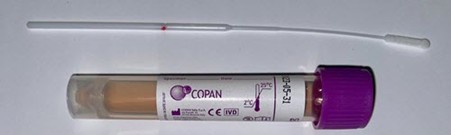
Ensure your clinic is stocked with Flocked Viral Swabs, which are used for measles virus RNA PCR testing. Do not send patients with suspected measles to a laboratory for a swab or any other test.
Infection prevention and control practice points
• In an outbreak, have signage at entry, and screen all patients for measles symptoms when booking appointments.
• Have a plan for patients who phone ahead concerned about measles, e.g. ask them to call from their car, give them a surgical mask, and take them directly to identified room or other spaces used for assessment. If clinically appropriate, consider seeing these patients at the end of a session to minimise disruption to clinic flows.
• Vacate the room where the suspected measles cases have been with the door closed and windows open (if possible) to improve air flow for one hour before cleaning. Clean the room and any equipment used with any broad‑spectrum disinfectant (e.g. Vircon, Viraclean, Clinell). The room can then be reoccupied.
Active recall for MMR immunisation
Prioritise those at highest risk of measles related complications, starting with <24 months, then <5 years, then older children and adults.
Resources
• Regional Community HealthPathways Measles: An important resource outlining best practices for assessing and managing measles, including notifying Public Health and managing close contacts of a confirmed case. If you do not have access to your Regional Community HealthPathways please reach out to your Practice Support Team.
• Quick answers to frequent MMR questions - IMAC: FAQs regarding the MMR vaccine including who should or should not have the MMR vaccine.
• Priorix - IMAC: Provides an overview of Priorix, the funded MMR vaccine, including its scheduled and recommended administration times, effectiveness, and possible post-administration responses.
• My Health Record: Online access to personal immunisation records, from 2004 onwards. Patients can be directed to this website via the patient portal, practice website, or voicemail message.